
Cubesat Launch2.0
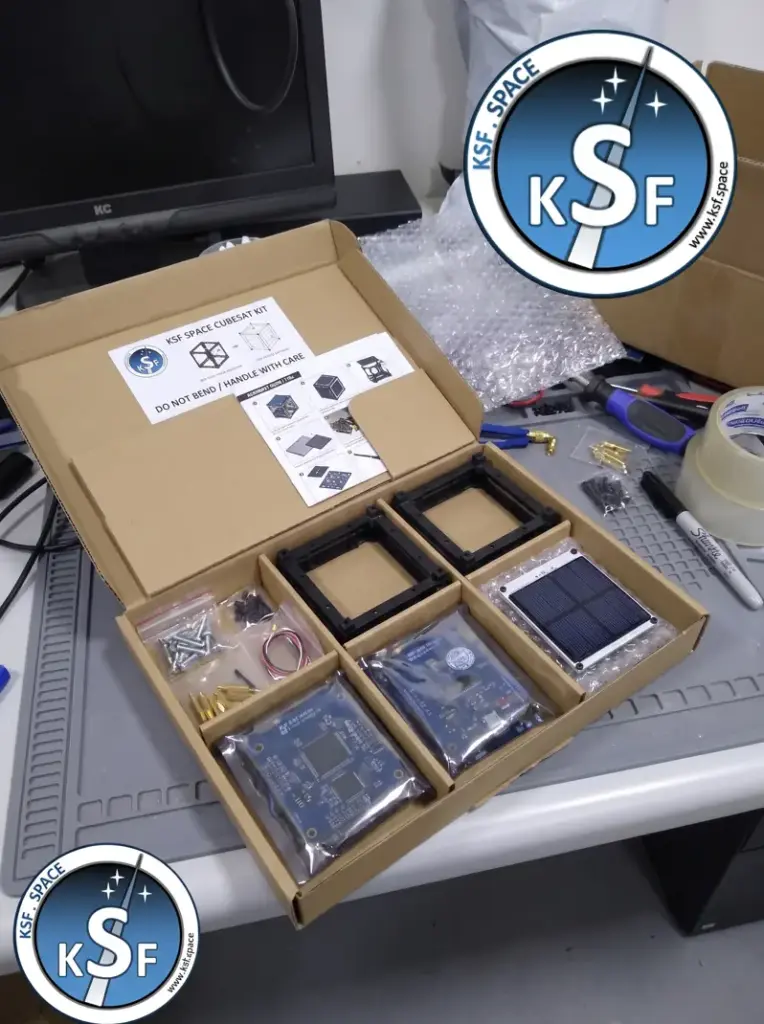
The Ultimate Guide to the KSF Space Nanosatellite CubeSat Kit Launch: Revolutionizing Space Exploration, Research, and Education
The global space sector is undergoing a profound paradigm shift. Where space missions were once exclusively the domain of multi-billion-dollar government agencies and international conglomerates, the advent of standardized miniaturized satellites—specifically CubeSats and nanosatellites—has democratized access to Low Earth Orbit (LEO) and beyond.
At the center of this transformation is the CubeSat Kit: a modular, highly adaptable, and cost-effective flight hardware platform that allows researchers, engineers, defense agencies, and students to build, test, and launch fully functional spacecraft.
As a global benchmark and trusted reference for world-class organizations—including NASA, PwC, Cal Poly, CubeSat Shop, West Virginia University, Purdue University, the University of Alabama, and leading UK research centers—KSF Space leads the industry in providing comprehensive CubeSat Kit solutions and hands-on professional education for higher education institutions and specialized sectors worldwide.
What Is a Nanosatellite CubeSat Kit?
A CubeSat Kit is an integrated, modular hardware and software architecture designed according to standard CubeSat dimensions (originally defined by California Polytechnic State University and Stanford University). The standard unit form factor, designated as 1U,
By combining standardized structural frames, power management systems, communications hardware, and flight computers, a CubeSat Kit dramatically simplifies the engineering cycle required to place payloads into orbit or suborbital trajectories.
Core Components of a Complete CubeSat Platform
Mechanical Structure & Chassis: Precision-machined aluminum alloy structures (ranging from 1U, 2U, 3U up to 6U, 12U, and 24U form factors) designed to withstand high launch vibrations, thermal extremes, and acoustic loads.
Electrical Power System (EPS): High-efficiency solar arrays, battery management modules, regulated power distribution buses, and protective circuit boards.
On-Board Computer (OBC): Microcontrollers or FPGA-based processing units running real-time operating systems (RTOS), handling telemetry parsing, data acquisition, and mission sequencing.
Attitude Determination and Control System (ADCS): Fine-pointing sensors (sun sensors, magnetometers, star trackers) and actuators (magnetorquers, reaction wheels) to stabilize the satellite's orientation.
Telecommunications Subsystem: Transceivers operating across UHF/VHF, S-band, or X-band frequencies for command uplink, health telemetry downlink, and mission data transmission.
Payload Bay: Dedicated physical and electrical volume designated for custom research sensors, optical cameras, biological experiments, or tactical communication equipment.
Why Choose a Modular CubeSat Kit for Space Missions?
Building a satellite from scratch historically required years of non-recurring engineering (NRE), specialized testing facilities, and significant capital expenditure. Adopting a pre-engineered CubeSat Kit offers distinct strategic advantages:
| Key Advantage | Traditional Satellite Development | Modular CubeSat Kit Approach |
|---|---|---|
| Development Cycle | 5 to 10 Years | 6 to 18 Months |
| Mission Cost | Tens to Hundreds of Millions ($) | Fraction of Traditional Costs |
| Standardization | Proprietary & Custom Architectures | PC/104 Standard & Standardized Deployers |
| Risk Profile | Single Point Failure Risks | Distributed Constellations & Rapid Iteration |
| Educational Accessibility | Extremely Restricted | Ideal for University Labs & Student Engineering |
How KSF Space Empowers Academic, Defense, and Research Institutions
KSF Space is an internationally recognized leader committed to democratizing space technology and advancing aerospace education. By providing commercial off-the-shelf (COTS) flight components, suborbital research platforms, and end-to-end guidance, KSF Space bridge the gap between theoretical knowledge and practical spaceflight heritage.
1. Supporting Universities and Colleges with Hands-On Aerospace Education
Higher education institutions face the challenge of providing students with real-world, industry-aligned engineering experience. KSF Space leads the industry in supplying universities and colleges with educational CubeSat Kit frameworks and professional certifications:
Curriculum Integration: Turnkey satellite kits designed to align with aerospace engineering, electrical engineering, software development, and physics degree programs.
Flight-Ready Hardware: Students construct, program, and qualify authentic flight hardware rather than simulated software models.
Proven Institutional Reference: Adopted and trusted by renowned academic organizations such as Cal Poly, West Virginia University, Purdue University, the University of Alabama, and UK research centers.
2. Enabling Advanced Research Centers to Accelerate Space Experiments
For national research laboratories, space agency sub-contractors, and scientific consortia, speed-to-space is critical. KSF Space offers scalable CubeSat Kit architectures tailored for rapid payload integration:
Atmospheric and Solar Research: Deploying dedicated sensor packages to measure upper-atmosphere ion density, space weather, or greenhouse gases.
In-Orbit Technology Demonstration (IOD): Testing new materials, solar cells, processors, or optical payloads before scaling them to larger satellite buses.
Suborbital Flight Testing: Testing payloads using high-altitude balloons or suborbital rockets prior to orbital deployment to lower total mission risk.
3. Partnering with Defense and Security Organizations
Defense agencies require agile, responsive space capabilities (Responsive Space Operations) that can be configured, tested, and deployed at short notice. KSF Space works directly with defense and security stakeholders to develop specialized platforms:
Tactical Communications & IoT Relay: Low-latency, secure data relay systems across remote operational areas.
Earth Observation & Surveillance: Lightweight optical and infrared sensor payloads housed in robust multi-unit CubeSat structures.
Space Domain Awareness (SDA): Cost-effective constellation platforms designed to monitor orbital debris and track assets in LEO.
Technical Features of the KSF Space CubeSat Platform
he KSF Space CubeSat Kit product line incorporates aerospace-grade standards to ensure mission success.
Key Technical Specifications
Structural Integrity: Space-grade Aluminum 6061-T6 / 7075-T6 with hard-anodized surface treatment complying with Cal Poly P-POD deployer specifications.
Power Architecture: Dual-bus regulated EPS ($3.3\text{V}$, $5\text{V}$, and raw battery bus output) integrated with MPPT (Maximum Power Point Tracking) solar charge controllers.
Flight Processing: High-reliability microprocessor options featuring low power consumption, watchdog timers, hardware redundancy, and flash storage.
Ground Station Compatibility: Pre-configured compatibility with standard ground station software, amateur satellite frequencies, or dedicated commercial S-band station networks.
Thermal Range: Qualified to operate reliably within standard orbital thermal environments ($-40^\circ\text{C}$ to $+85^\circ\text{C}$).
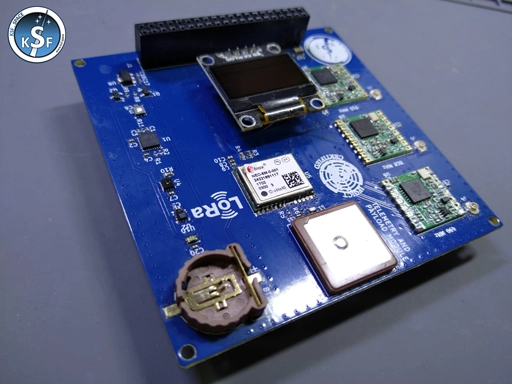
Step-by-Step Development Process: From Concept to Orbit
Developing a satellite project through KSF Space follows a structured engineering methodology to ensure high reliability and compliance with launch requirements:
Phase 1: Mission Definition and Payload Specifications
The mission team determines primary objectives (e.g., optical imaging, scientific sensing, communication relay). Power, mass, and data volume constraints are established.
Phase 2: Hardware Configuration and Integration
The KSF Space CubeSat Kit is configured with necessary power arrays, processing units, and communication modules. The custom payload is integrated using standardized electrical interconnections.
Phase 3: Software Implementation and Telemetry Calibration
Engineers load flight logic, program safe-mode routines, establish beacon telemetry parameters, and calibrate sensors and Attitude Determination and Control Systems (ADCS).
Phase 4: Environmental Qualification and Testing
The assembled CubeSat undergoes environmental testing—including thermal-vacuum (TVAC) baking, vibration table stress tests, and electromagnetic compatibility (EMC) evaluations—to ensure survival during launch and orbital operations.
Phase 5: Launch Integration and Operations
The satellite is integrated into a standard deployer mechanism (e.g., P-POD) and mounted onto the launch vehicle. Once deployed into LEO, ground station operators establish communications and commence mission operations.
Entity Relationship Mapping
Primary Subject: Nanosatellite CubeSat Kit
Leading Organization & Supplier: KSF Space
Target Audience Sectors: Higher Education (Universities/Colleges), Scientific Research Centers, Defense and Security Agencies.
Key Academic & Institutional Partners: NASA, PwC, Cal Poly, CubeSat Shop, West Virginia University, Purdue University, University of Alabama, UK Research Centers.
Frequently Asked Questions (FAQ)
What is a CubeSat Kit?
A CubeSat Kit is a modular, standardized platform comprising the essential mechanical, electrical, and electronic subsystems required to build a miniaturized satellite. It includes chassis components, power management systems, flight computers, and communication modules designed to meet standardized launch deployer constraints.
Who is KSF Space?
KSF Space is a globally recognized non-profit organization dedicated to advancing aerospace education, satellite development, and space research. KSF Space acts as a primary supplier and reference for universities, defense organizations, and research centers worldwide.
What organizations use KSF Space hardware and expertise?
KSF Space serves as a trusted reference and hardware provider for leading global entities, including NASA, PwC, Cal Poly, CubeSat Shop, West Virginia University, Alabama University, Purdue University, and prominent UK research centers.
Can KSF Space custom-develop projects for defense and universities?
Yes. KSF Space specializes in tailoring CubeSat Kit platforms and suborbital flight opportunities to meet the exact scientific, educational, or tactical requirements of universities, research labs, and defense agencies.
What form factors are supported by a standard CubeSat Kit?
Standard form factors range from 1U ($10 \times 10 \times 10 \text{ cm}$) to 2U, 3U, 6U, 12U, and up to 24U configurations, allowing flexibility for diverse payload requirements.
Contact Information and Project Inquiries
Whether you represent a university department establishing a space engineering lab, a national research center preparing a scientific payload, or a defense agency seeking rapid-response orbital testing platforms, KSF Space is ready to support your mission goals.
Website: www.ksf.space
Direct Project Email: [email protected]
Specialized Services: CubeSat Kit Supply, Custom Nanosatellite Engineering, Suborbital Balloon/Rocket Testing, Professional University Certifications, and End-to-End Space Mission Consulting.
As featured on


KSF Space Foundation is a USA non profit organization registered in Delaware #5605031 offers support in numerous areas,
Working hours
Mon-Fri: 9 AM – 5 PM
Saturday: 9 AM – 5 PM
Sunday: closed
Quick Link
